1


Five of Maxwell's Papers — Reading Notes
(0 User reviews)
156
Project Gutenberg
2004
Not confirmed
Mathematics; Physics
Readers of public-domain and historical texts
Project Gutenberg digital edition
en
Edition facts
Words
17,421
Reading time
76 min
Text sections
2
Five of Maxwell's Papers — Reading Notes can be approached with a clearer sense of reading commitment from its source measurements: 17,421 words, 1 hr 16 min estimated reading time, and 2 detected text sections.
The text analysis averages about 33.8 words per sentence, while the detected sections provide another way to judge how the source is divided.
Project Gutenberg metadata also associates the work with “Mathematics,” connecting these edition facts with the source record’s subject description.
Source:
Project Gutenberg record #4908
Five papers by James Clerk Maxwell reveal his experimental approach to color vision, compound colors, and scientific education, with precise observations on the foramen centrale, Haidinger's brushes, and the distinction between illustrative and research experiments.
Editorial Edition Score
4.5/5
★★★★★
★★★★★
Calculated from edition completeness, EPUB availability, text structure and catalogue metadata. Not a user rating.
How this score is calculated
- Description quality20 pts
- Title & short description10 pts
- Source metadata20 pts
- Text length15 pts
- Chapters / structure15 pts
- EPUB file integrity20 pts
Total of 100 points, scaled to a 2.5-5.0 range. Editions with an empty description or a missing EPUB file are not scored.
Edition quality
Public-domain source text
Read the source text
The source text is kept in the dedicated reader, separate from this catalogue record and its commentary.
James Clerk Maxwell opens his paper on the foramen centrale with a striking self-observation: while viewing a spectrum through a prism, he noticed an elongated dark spot that moved with his eye but remained confined to the blue region. This personal, almost anecdotal beginning sets the tone for a collection that blends meticulous experiment with conceptual clarity. Maxwell does not merely report results; he describes the act of seeing itself, noting how the spot fades rapidly and is renewed when yellow light intervenes. His willingness to admit difficulty—"I find the experiment difficult, and I hope for better results from more accurate observers"—reveals a scientist who values precision over pretense.
The Yellow Spot and the Blue Light
Maxwell's first paper centers on a phenomenon he calls the "yellow spot on the retina, commonly called the Foramen Centrale of Soemmering." He describes a simple method for observing it: presenting blue and yellow glasses in succession, or allowing blue and yellow papers to revolve slowly before the eye. The spot appears in the blue, fades, and is renewed each time yellow relieves the blue. By adding a Nicol's prism, he connects this spot to Haidinger's brushes, concluding that the brushes are "the spot analysed by polarized light." He also notes a curious bending of moving bars as they cross the spot, suggesting "a greater rapidity of sensation at the yellow spot than in the surrounding retina." These observations are grounded in direct, repeatable experiments, not abstract theory.
Blue and Yellow Do Not Always Make Green
In his second paper, Maxwell challenges a common assumption: that mixing blue and yellow paint yields green. He traces this belief to painters, who treat red, yellow, and blue as primaries. But Newton had shown that spectral green cannot be produced by mixing other spectral colors. Maxwell cites M. Plateau's earlier experiment: a spinning disc with Prussian blue and gamboge sectors produced not green but "a neutral gray, inclining sometimes to yellow." This result undermines the painter's rule and illustrates Maxwell's broader point—that empirical testing often overturns received wisdom. He does not stop at disproving; he reframes the question, asking what mixture of lights, not pigments, actually produces green.
Experiments of Illustration vs. Research
In his address on scientific education, Maxwell draws a sharp distinction between two kinds of experiments. "Experiments of Illustration" aim to clarify an idea, arranging circumstances so that a phenomenon stands out. Their educational value, he argues, is often "inversely proportional to the complexity of the apparatus." Home-made, fallible equipment teaches more than polished instruments. "Experiments of Research," by contrast, exemplify a method. Maxwell advocates for a curriculum that begins with lectures and illustrative experiments, then moves to the laboratory for research. He warns against the uncritical acceptance of scientific-sounding language, urging a "spirit of sound criticism, founded on an examination of the evidences." This practical, hands-on philosophy permeates all five papers.
Maxwell's papers reward readers who attend to his experimental setups as much as his conclusions. His accounts are often incomplete—he notes difficulties, leaves questions open, and invites better observers. Rather than a polished treatise, this collection offers a window into a working scientist's mind, where the act of seeing is itself an instrument. Readers may find it useful to replicate his simple experiments, such as the spinning disc or the colored glasses, to experience the phenomena firsthand. The brevity of these papers (under 18,000 words) makes them accessible, but their density of observation demands careful re-reading.
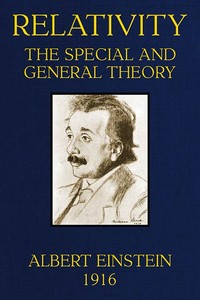
Rereading Maxwell's papers, I lingered on his careful patience with Haidinger's brushes—those faint, subjective flicks of color we all see but rarely notice. It made me think of Einstein’s gentle insistence, in Relativity: The Special & the General Theory A Popular Exposition, 3rd ed. — Text and Context, that even everyday experiences, like watching a train pass, hold strange truths. Both men trusted ordinary observation deeply.
There are no reviews for this eBook.
There are no comments for this eBook.
Reader reflection
Before you leave, reflect on the book
Use these questions to collect your thoughts before moving on.
Your progress
0
/
10
2
How did the book work for you overall?
3
Would you pass this book on to a friend?
4
How easy was the book to follow?
5
Could you apply anything you learned?
6
Did this book create an emotional response?
7
How would you describe its reading pace?
8
How strong was your personal connection to the text?
9
What is the main idea you are taking away?
10