
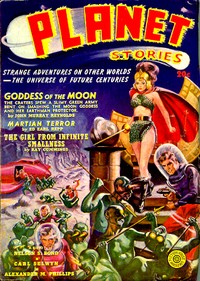
The Space Flame by Alexander M. Phillips
I stumbled upon 'The Space Flame' in a used bookstore, intrigued by its classic 1950s cover and the fact it was written by a physicist. Alexander M. Phillips wasn't just making things up; he was writing from the edge of what was known in his time, and that authenticity bleeds through every page.
The Story
The story follows Dr. Aris Thorne, a man haunted by his work on the Manhattan Project. In his secluded desert lab, he stumbles upon the 'Space Flame'—a stable energy field that seems to draw power from the fabric of space itself. His initial triumph is short-lived. The energy begins to affect him, causing vivid hallucinations and a dangerous disconnect from reality. Meanwhile, his military liaison, Major Briggs, sees only a new super-weapon for the Cold War. Thorne is torn. He believes the Flame could revolutionize energy, but he can't control it, and he can't trust his own perceptions. The core of the plot is his frantic, often paranoid attempt to hide his deteriorating condition while protecting his discovery from being turned into a bomb.
Why You Should Read It
This isn't a flashy space opera. Its power comes from getting inside Thorne's head. Phillips makes you feel the scientist's obsession, his guilt over past work, and his genuine terror as his greatest achievement starts to unravel him. The 'science' feels weighty and plausible, which makes the psychological spiral even more compelling. The conflict with Major Briggs isn't just good vs. evil; it's two worldviews clashing—pure scientific curiosity versus immediate, practical (and destructive) application. It asks a question that's still urgent today: just because we can do something, should we?
Final Verdict
'The Space Flame' is a hidden gem for readers who love classic, idea-driven science fiction. Think of the tense, moral explorations of early Michael Crichton or the psychological depth of Daniel Keyes' 'Flowers for Algernon,' but with a 1950s atomic-age anxiety. It's perfect for anyone who enjoys stories where the biggest threat isn't aliens or monsters, but human ambition and the unknown consequences of our own genius. If you find modern sci-fi sometimes too slick, this book's earnest, brainy, and deeply human approach will be a breath of fresh air.
Legal analysis indicates this work is in the public domain. Preserving history for future generations.
Matthew Smith
5 months agoAfter a thorough walkthrough of the table of contents, the author doesn't just scratch the surface but goes into meaningful detail. Truly a masterpiece of digital educational material.
William Thomas
3 months agoIt’s rare to find such a well-structured narrative nowadays, the way it handles controversial points with balance is quite professional. If you want to master this topic, start right here.
Elizabeth Miller
5 months agoFrom a researcher's perspective, the quality of the diagrams and illustrations (if applicable) is top-notch. A perfect balance of theory and practical advice.
Thomas Jackson
7 months agoMy first impression was quite positive because the chapter on advanced strategies offers insights I haven't seen elsewhere. A solid investment for anyone's personal development.

William Anderson
3 months agoThe clarity of the introduction set high expectations, and the case studies and practical examples provided add immense value. An excellent example of how quality digital books should be formatted.