
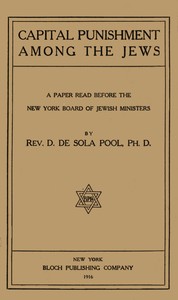
Capital punishment among the Jews : a paper read before the New York Board of…
The Story
Back in 1914, Rabbi David de Sola Pool stood up at the New York Board of Jewish Ministers and read a paper that, on the surface, sounds dry as dust: capital punishment among ancient Jews. But oh, it’s so much cooler than that. He’s basically dismantling a huge myth—that Jewish law was all about stoning people for minor sins. Not even close. What Pool reveals is a legal machine built to keep executions as rare as possible. For example, to convict someone of a capital crime, you needed at least two eyewitnesses who had seen the crime and warned the person ahead of time that what they were about to do was punishable by death. The person had to ignore this warning, then commit the crime in front of those same exact witnesses. If that sounds nearly impossible, that was the point. Pool traces how the rabbis turned the courts into labyrinths of proof, effectively ruling out the death penalty in almost every case. Legend says a court that executed even one person in seventy years was considered cruel. Let that sink in
Why You Should Read It
I picked this up out of curiosity, expecting a dusty list of laws. But Pool’s voice is like sitting down with an appreciative uncle who cares deeply about history and ethics. The paper shines when he talks about why these rabbis defended life so ferociously—because according to their religious beliefs, taking a life was taking a whole human soul’s potential. What makes this so good is how it connects to modern problems: we still argue about who deserves to die and who should do the killing. Pool shows you that these arguments have deep, thoughtful roots millennia old. He also drops some tension: he even contrasts Jewish law's mercy with the famed “eye for an eye” code everyone knows. In Jewish hands, that code was twisted into a ban on violent revenge, not an approval of it. That smacks of misunderstood Bible lore. Even after more than a century, his talk feels relevant—maybe because we keep relitigating these dilemmas today
Final Verdict
Now, this is a talk transcript from 1914, so it’s not a thriller. If you want action-packed chapters, this isn’t that. But if you were interested in understanding Jewish history, ethics, or ancient legal and people systems, this writing is brilliant. It's fast—you could honestly read it in an afternoon—which is great for anyone curious about heavyweight subjects without footnotes making your eyes glaze. Pool’s writing also hurts when you wade through stiff academic work because he talks you through complexities with warmth and unexpected aha moments. Perfect for history nerds, anti-death penalty philosophers, or religious studies folks who enjoy seeing old radical thought. Oh, plus it’s free online, so what do you have to lose—chance to refresh everything you assumed about punitive justice and some seriously nonviolent wisdom from folks who lived thousands of years with it
This content is free to share and distribute. It is available for public use and education.
Susan Harris
4 months agoI was skeptical about the depth of this book at first, but the formatting on mobile devices is surprisingly crisp and clear. A solid investment for anyone's personal development.
Charles Lopez
11 months agoHaving followed this topic for years, I can say that the case studies and practical examples provided add immense value. A perfect balance of theory and practical advice.








Susan Gonzalez
7 months agoHaving read the author's previous works, the argument presented in the middle section is particularly compelling. I'm glad I chose this over the other alternatives.